Elon Musk Money Game: Why I'm Making Games Again
In a world that often chases quick thrills and viral trends, quirky hits like the Elon Musk Money Game or ‘Spend Elon Musk’s Money’ can spread online in just a few days. They give people a silly yet fascinating peek at what it might be like to spend billions. One moment you’re snapping up a tropical island. The next, it’s diamond-covered sneakers (yes, they’re real). Under all the humor, there’s often more going on. These games can spark ambition, encourage creative ideas, sharpen problem-solving, and reflect the messy reality of chasing huge dreams.
Why the ‘Elon Musk Money Game’ Captured Attention
Recently, those online billionaire calculators and pretend shopping sprees have been appearing all over the internet. The idea is straightforward but strangely addictive: you’re given an outrageous fortune, maybe $240 billion, and scroll through a massive list, “buying” things until your balance hits zero. It’s like playing in a digital money playground. However, after a while, the excitement can fade since there’s no real connection to everyday life, just a huge number counting down.
Still, people keep sharing these games. Some do it out of curiosity, others for harmless fantasy, and sometimes it’s a subtle nod to bigger topics. You can picture picking up things you’d never seriously think about, private islands, garages full of rare supercars, or even entire companies. That kind of make-believe comes with a quiet reminder: the enormous gap between rich and poor. Oxfam says the richest 1% own more than twice the wealth of 6.9 billion people combined. Pretending to burn through billions might be funny in the moment, but it can quickly feel sobering when you realize how far that fake spending spree is from reality.
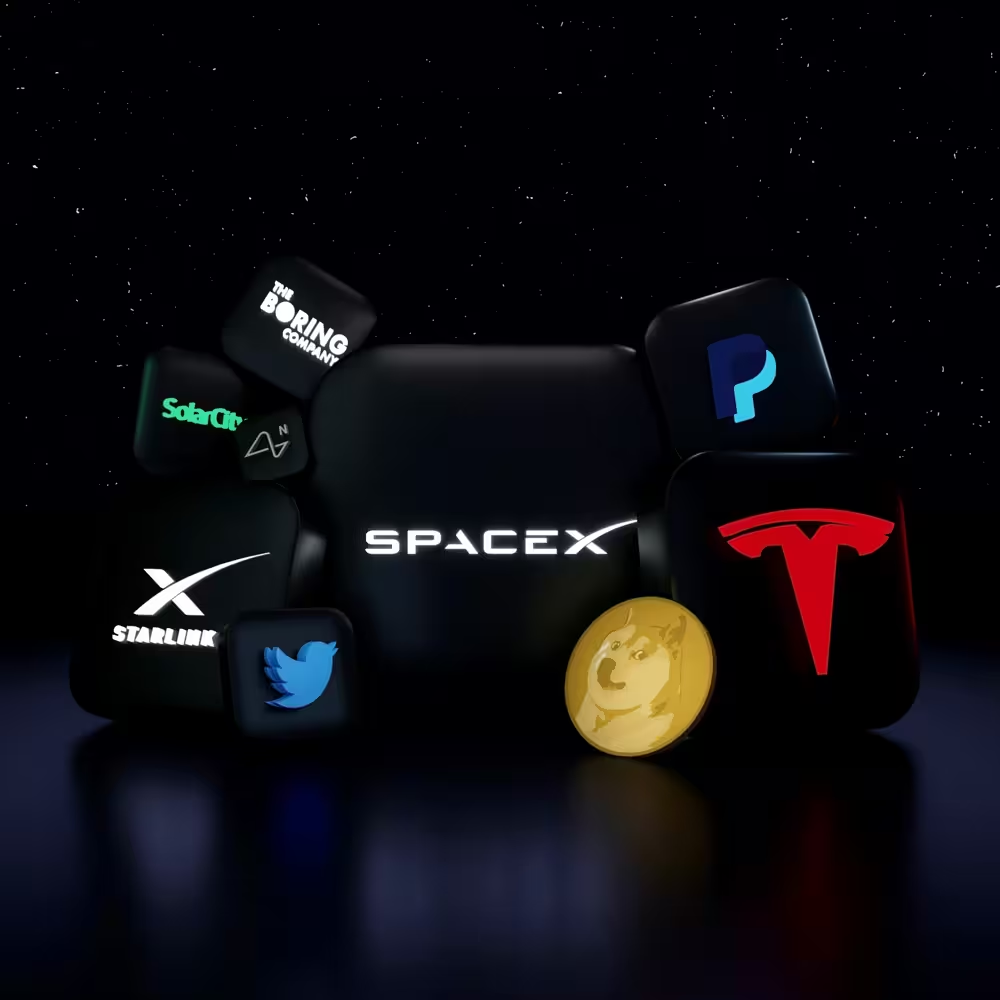
Musk’s fortune gets attention not only for its size but for how it came to be: big risks, unusual ideas, and constant drive. Musk has just crossed $700 billion in net worth, shifting often with Tesla’s stock, SpaceX’s value, and other ventures.
Moving Beyond Click-and-Spend in the Elon Musk Money Game
Many “money games” end up feeling like flashy spreadsheets. You spend until your funds run dry, yet nothing changes no matter what you do. In real life, wealth on a Musk-sized level often comes from smart risks, building things that last, and letting those wins grow into bigger ones over time.
Here, the setup acts more like a living economy you can push, shake up, or guide, instead of just a virtual shopping spree. You could start in 1995 with only $1,000, where every decision matters, or jump ahead to 2025 with billions already at your fingertips. Starting small pushes you to be creative. Beginning with a huge fortune changes the challenge: guard what you have, grow it without going overboard, and resist spending just for the thrill.
Industries boom and fade. Inflation cuts into profits. Market leaders swap positions. Betting on electric cars might work unless battery progress stalls. You could splash millions on yachts or piece together a business empire through sharp acquisitions. Over time, costs rise, income grows, and massive goals like building a Mars base call for smart risk‑spreading.
The Meme vs. The Mission in the Elon Musk Money Game
Turning billionaires into memes can make them feel both out of reach and strangely relatable. People love quick jokes, weirdly edited photos of Musk, and lighthearted jabs at him impulsively buying Twitter. These moments spread fast. However, the viral fun often skips over the tough, messy work hiding behind the shine.
Musk’s path, from Zip2 to SpaceX, was built on risky moves that could have failed at any step. In 2008, SpaceX was hanging by a thread after three launch failures. Tesla was almost out of money until a last-minute investment saved it. Those moments showed that chasing a long-term goal means pushing through harsh setbacks.
That’s the thinking behind Spend Elon Musk Money. Sure, you could buy a yacht or put millions into clean energy projects. Maybe back bold AI ideas. It’s a choice: grab the flashy quick win or invest in something that could change the future.
Designing for Depth in the Elon Musk Money Game
Back in the early days of Facebook gaming, it became obvious quickly: you only have a short moment to grab attention. Once they’re interested, you need layers that keep them playing. Flashy bits can spark curiosity, but in games like this, thoughtful strategy keeps players engaged.
Here’s how that depth shows up:
- Steady income from different types of investments
- Faster growth if you reinvest instead of spending instantly
- A shifting economy that changes with inflation and competition
- Big long-term goals like starting a Mars colony or advancing AGI
- Trade-offs where chasing quick wins can hurt bigger plans
The story moves alongside gameplay. One day you’re backing groundbreaking AI work; the next, weighing speed against safety.
Lessons for Early-Stage Founders
Making a game like this isn’t just about entertainment. It shows how one small idea can grow into something that shapes people’s experiences.
- Purpose-driven innovation: Games that connect with themes like sustainability can leave a real impact. See importance of purpose in business for more.
- Psychological resilience: Facing tough choices in a safe setting gives a taste of the highs and lows founders go through.
- Emerging tech adoption and creative design: Combining AI with storytelling keeps games fresh.
These lessons go beyond gaming. Startups can learn from systems that change based on user feedback.
Strategic Gameplay for Strategic Minds in the Elon Musk Money Game
The Elon Musk Money Game turns big, risky decisions into a fun challenge. Just like Musk pouring resources into rockets and AI projects, players decide where to send virtual cash. Every move comes with both opportunity and risk.
You’ll see your plans play out in real time. Maybe you jump into quantum computing. If it succeeds, you unlock perks. If it stalls, your funds shrink.
For those new to angel investing, it’s a no-pressure way to explore portfolio planning. For aspiring founders, it’s a space where even failures can spark fresh ideas.
Realistic Goals, Absurd Fun in the Elon Musk Money Game
Sure, you could still splurge on a gold-plated toilet just for reactions. But the game also lets you try things like:
- Starting a satellite network for rural towns
- Investing in quantum computing
- Supporting political movements
- Creating interplanetary supply lines
Ideas like these keep excitement going. Spend half your budget on nonsense and that Mars project might slip away. Stick only to “smart” choices, and it can feel like a chore.
Why I’m Making Games Again with the Elon Musk Money Game
After years on other projects, I realized games can turn far-off ideas into something you can play with. They’re like stories you can walk into.
When I worked in game development before, I saw that fun comes from mixing “easy to start” with “hard to master.” That’s exactly what the Elon Musk Money Game is going for: quick jokes for meme fans, but also enough strategy for empire builders.
Musk’s story blends big dreams with risky moves. In the game, that means managing rockets, cars, clean energy, and tech mishaps.
Your Path Forward with the Elon Musk Money Game
Becoming a founder can feel less like following a straight road and more like steering through twists and turns in heavy fog. Money matters, but reading the signs right in front of you often makes the difference.
That’s where games like ours come in. You can rush into rapid growth, move slowly with caution, or explore offbeat ideas like llama farms. Inside the simulation, you’ll feel the thrill of huge wins and the sting of a big flop.
Whether it’s spending $749 billion on llamas or chasing stranger projects than a Mars colony, the Elon Musk Money Game shows how fortunes can grow from bold ideas. See more of my thoughts on competing in the attention economy. Try it, and see how your choices shape the ending.